
Will you be able to rebuild?
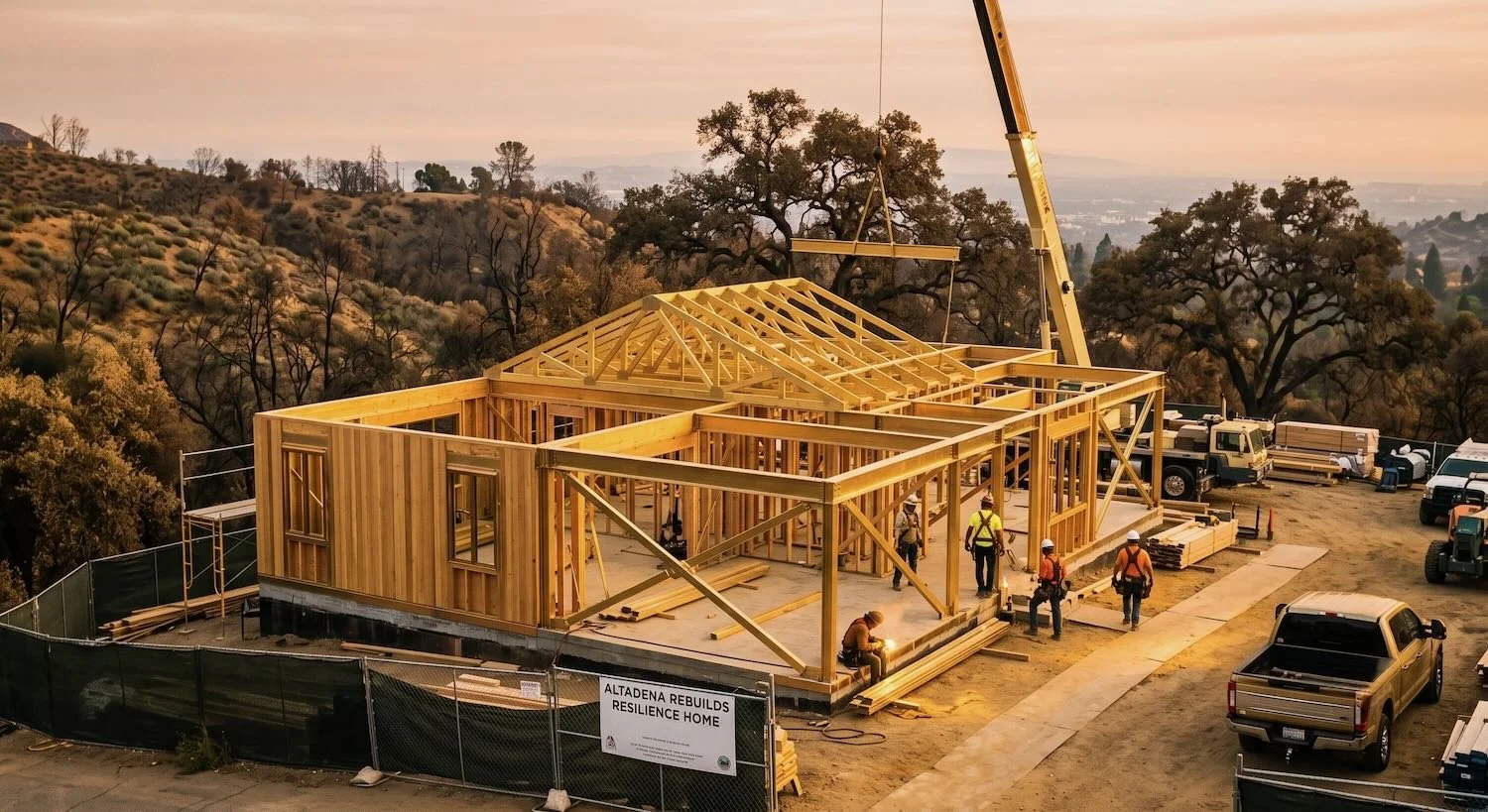
Seems like they use gold…
THIS PAGE IS UNDER CONSTRUCTION we will be updating it as soon as possible.
SBA Disaster Loan Limits Explained
https://share.gemini.google/Twh91WUrSGGy
Created with Flash July 19, 2026 at 05:29 AMPublished July 19, 2026 at 05:36 AM
With the homeowners whose homes were destroyed or seriously damaged during the Los Angeles fires how many of them will likely need a disaster loan higher than $500,000 to rebuild
The short answer is none of them will be able to get a standard SBA home disaster loan higher than $500,000 to rebuild the structure of their home.
The Small Business Administration (SBA) sets a strict regulatory cap on Home Disaster Loans, allowing a maximum of$500,000 to repair or replace a primary residence. No matter how high the actual cost of rebuilding a home in Los Angeles might be, the loan amount for real estate damage cannot exceed this ceiling.
However, there are a few nuances to how total funding can exceed $500,000 through other SBA avenues:
Personal Property Loans: Homeowners can apply for up to an additional $100,000 to repair or replace personal property (like furniture, clothing, appliances, or vehicles) destroyed in the fires. This is separate from the real estate cap.
Mitigation Increases: Borrowers can request a loan increase of up to 20% over the verified physical damage amount specifically for mitigation measures (such as fire-resistant landscaping, retaining walls, or structural hardening). This can potentially add up to $100,000 to a maxed-out real estate loan, pushing the structural total up to $600,000.
Rental Properties: If the homeowner owned the destroyed property as a residential rental unit, it is evaluated under the Business Physical Disaster Loan program rather than a home loan. Businesses and landlords can borrow up to $2 million to repair or replace disaster-damaged real estate.
For primary residences where the cost to rebuild exceeds these combined thresholds, homeowners must rely on private hazard insurance payouts, personal funds, or state/local grants to cover the remaining gap.
Whether they can get it or not. I am asking how many likely are under insured to be able to rebuild at current costs. Be concise and direct.
Historically and in recent disaster data, roughly two-thirds (60% to 66%)of all homeowners who lose their homes to major California wildfires find themselves underinsured.
PBS
Given that current Los Angeles building and fire-hardening codes, combined with a 44% spike in local construction costs over the last five years, have pushed real-world rebuilding costs to between $800 and $1,000 per square foot, a staggering number of these families face a massive financial gap.
The primary reasons for this high percentage include:
Outdated Policy Limits: Payout caps are usually tied to standard inflation indicators rather than localized, disaster-driven demand surges for labor and materials.
PBS
The Death of Guaranteed Replacement: Most modern policies carry "Extended Replacement Cost" caps (usually a 20% to 50% buffer over the baseline policy limit) rather than a blank check to rebuild, which quickly gets wiped out in high-cost metro areas like Los Angeles.
Based on recent wildfire recovery data, those who fall into this two-thirds underinsured category are facing an average personal shortfall of $200,000 to over $300,000 out of pocket to rebuild the exact same square footage they lost.
United Policyholders
How many homeowners would that be? Be concise and direct.
Based on data from the devastating January 2025 Los Angeles wildfires (primarily the Palisades and Eaton fires), state assessments show that over 11,000 single-family homes and more than 17,000 total residential structures were destroyed or seriously damaged.
State of the Planet - Columbia University
Applying the historical California underinsurance baseline of 60% to 66%, that translates directly to roughly 7,000 to 11,000+ homeowners who lack the insurance payouts necessary to cover today's true rebuilding costs in LA.
Provide the base information reports etc you are basing this information on. Be concise and direct.
The specific metrics and numbers are anchored in post-disaster data, independent risk analyses, and state insurance assessments:
1. Post-Disaster Damage Reports (Structure Counts)
The Baseline Data: The figures regarding destroyed and damaged residential units are sourced from the California Department of Forestry and Fire Protection (CAL FIRE) individual structural damage inspection data (DINS), paired with subsequent analytical reviews by institutions like Western Washington University's Pyrogeography Lab and researchers at UCLA.
The Specifics: Final damage assessments from the early January 2025 Los Angeles County complex (specifically the Palisades Fire and the Eaton Fire) documented over 16,000 to 18,000 total structures impacted. The Palisades fire registered more than 6,300 to 6,800 structures destroyed or damaged, while the larger Eaton fire footprint in the Altadena/Pasadena interface accounted for roughly 9,400 to 10,500 structures.
Wikipedia+ 1
2. Rebuilding Costs & Total Insured Value (TIV) Reports
The Baseline Data: The metrics outlining current local building valuations ($800–$1,000/sq. ft. for high-end coastal WUI zones like the Palisades and $500–$600/sq. ft. in the foothills) are anchored in the Milliman Actuarial Analysis on Industry Insured Losses for Los Angeles Wildfires.
The Specifics: Milliman utilized FEMA replacement cost models updated to recent construction cost thresholds. The average estimated replacement cost for habitational units in the Palisades footprint sat at $955,000, with the average Total Insured Value (TIV) climbing to $1.8 million per parcel once contents and additional living expenses (ALE) were counted.
Milliman
3. Wildfire Underinsurance Baselines
The Baseline Data: The 60% to 66% underinsurance trend relies on historical claims tracking from the California Department of Insurance (CDI) under Insurance Code Section 929 (Wildfire Risk Information Reporting), supplemented by post-disaster consumer surveys from advocacy groups like United Policyholders and the local Department of Angels survivor tracking group.
California Department of Insurance - CA.gov
The Specifics: Historically, these regulatory tracking summaries consistently reveal that roughly two out of every three homeowners impacted by catastrophic California blazes experience structural gaps where their policy limits fail to align with localized "demand surges"—the rapid spike in regional labor and material costs that occurs immediately following a mass disaster.
Milliman
Provide more sources. Be concise and direct.
The specific metrics regarding structural damage totals, regional replacement costs, and historical underinsurance baselines are drawn from the following primary post-disaster assessments and economic research papers:
1. Local Structural Damage Data
Source Report: Rebuilding for Whom? and The Invisible Workforce in Wildfire Recovery Occupations, published by the UCLA Latino Policy & Politics Institute (2025/2026).
The Findings: UCLA’s spatial data analyses utilizing CAL FIRE structural damage inspection datasets established the baseline numbers for the January 2025 complex. Their analysis documents that the Palisades and Eaton Fires combined damaged or destroyed over 16,000 to 18,000 total structures, with the Eaton Fire alone devastating roughly 10,500 structures in denser foothill communities like Altadena.
Supplementary Analysis: Pre- and Post-Fire Property Values in the Eaton Fire Burn Area, a 2025/2026 research report by the RAND Corporation. RAND’s modeling isolated the damage specifically to Single-Family Residences (SFRs), establishing that approximately 5,100 standalone single-family homes had their primary structures entirely destroyed within the Eaton Fire footprint alone.
2. Underinsurance Trends & "Coverage Neglect"
Source Study: Coverage Neglect in Homeowners Insurance (2024/2025 academic tracking study by J. Anthony Cookson, Emily Gallagher, and Philip Mulder).
The Findings: This comprehensive property-level disaster risk study analyzed the mechanics of mass wildfire underinsurance. It confirms the historical baseline that 60% to 74% of policyholders are underinsured following catastrophic fires, with 36% being "severely underinsured" (lacking even three-quarters of the necessary replacement cost). The study demonstrates that this gap is driven by a phenomenon called coverage neglect, where consumers rely on insurers' automated replacement cost software, which systematically understates real-world reconstruction quotes.
Consumer Data: Multi-year post-disaster insurance tracking surveys from United Policyholders (UP), which consistently show that roughly two-thirds of California wildfire survivors experience structural payout shortfalls due to localized demand surges.
3. Macroeconomic Cost Gaps
Source Report: Rising Property Insurance Costs: Opportunities for Federal Action, a comprehensive white paper by the Bipartisan Policy Center (BPC) (2025).
The Findings: The BPC report contextualized the total economic fallout of the January 2025 Los Angeles wildfires, estimating overall physical and economic damages between $250 billion and $275 billion. Crucially, it highlights the extreme rebuilding gap, noting that standard private insurance market payouts were projected to cover only $30 billion to $40 billion of the total damage, leaving thousands of individual property owners to navigate the remaining multi-billion dollar shortfall.
————————————————————————————————-
SBA Disaster Loan for Home Rebuilding
https://share.gemini.google/qTurrJeKvMBI
Created with Fast January 16, 2026 at 09:27 AMPublished July 16, 2026 at 06:37 AM
My home was destroyed in an earthquake and I do not have earthquake insurance. The incident was determined to be a national disaster. I owe $200,000 on the property. If I get a $500,000 disaster loan from the small business administration can I pay the mortgage off and then use the balance to rebuild the structure?
I am so sorry to hear about the loss of your home. Navigating the financial aftermath of a disaster is incredibly stressful, especially when balancing a significant mortgage against the need to rebuild.
The short answer is: Yes, in certain circumstances, you can use an SBA disaster loan to refinance an existing mortgage, but there are strict limitations on how much and when.
Reduce Flood Risk
Here is a breakdown of how the SBA’s home disaster loan rules apply to your specific situation.
1. Loan Limits for Homeowners
As of late 2023, the SBA increased the maximum loan amount for homeowners to $500,000 for the repair or replacement of a primary residence.
SBA
Rebuilding: You can use the portion of the loan designated for "real estate repair/replacement" to rebuild your structure to its pre-disaster condition.
Congress.gov
Refinancing: The SBA can include funds to refinance all or part of an existing mortgage (like your $200,000 balance), but this is not automatic.
SBA
2. Qualifications for Mortgage Refinancing
To use part of your $500,000 loan to pay off your $200,000 mortgage, you generally must meet three specific criteria:
Substantial Damage: Your home must have suffered "substantial" damage not covered by insurance (which fits your situation since you don't have earthquake insurance).
Reduce Flood Risk
Credit Elsewhere: You must be unable to obtain credit elsewhere at reasonable terms. The SBA will determine this based on your financial profile.
SBA
Intent to Rebuild: You must intend to repair or rebuild the property. You cannot use the loan to pay off the mortgage and then walk away from the property.
3. How the Math Works
The SBA calculates your loan amount based on the verified loss (the cost to rebuild) as determined by an SBA inspector.
LawHelp.org
If your rebuilding cost is $300,000 and your mortgage is $200,000, your total request would be $500,000.
If the SBA approves the refinance, they essentially "roll" your old high-interest mortgage into the new low-interest SBA loan. This results in a single, manageable monthly payment.
Summary Table: SBA Home Disaster Loan
FeatureLimit / RuleMax Real Estate Loan$500,000Max Personal Property$100,000 (furniture, appliances, cars)Interest RatesUsually range from 2% to 4% (fixed)TermsUp to 30 yearsPayment DeferralNo payments due for the first 12 months
Important Next Steps
Register with FEMA first: Even if you only want an SBA loan, you must start by registering at DisasterAssistance.gov.
Submit the SBA Application: Do not wait for an insurance settlement or a contractor's estimate. The SBA will send their own inspector to verify the loss.
Casco Maine
Request "Refinancing" specifically: When speaking with your SBA loan officer, explicitly state that you wish to be considered for mortgage refinancing as part of your disaster recovery.
Would you like me to help you find the specific SBA Disaster Loan application link or check the current interest rates for your area?